
Product Description
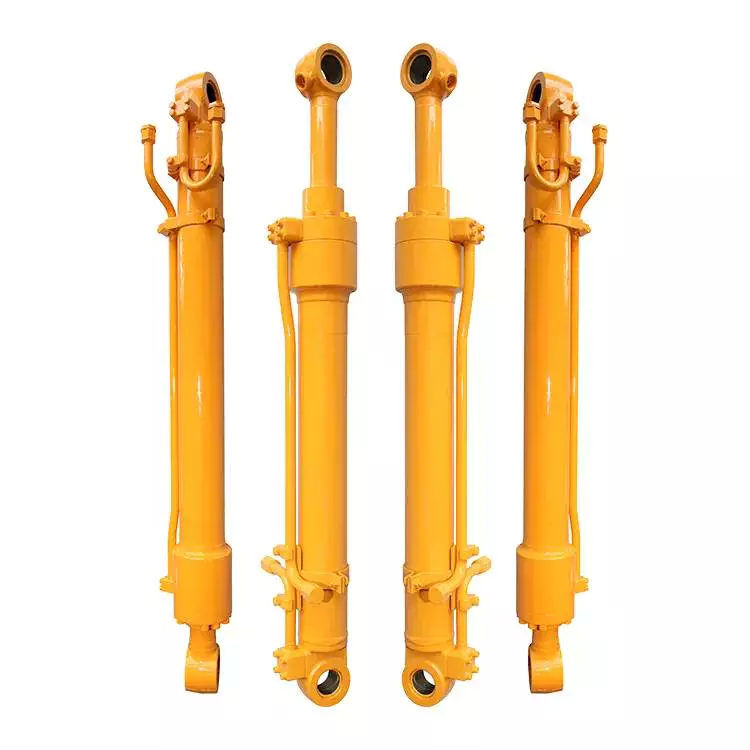
| 37Ton Log Splitter Parts 3 Stage Hydraulic Lifting arms Cylinder Ram For Sale | |||
| Part number | Tube dia mm | Rod dia mm | Stroke mm |
| 205-63-57100 | 120 | 85 | 1285 |
| 206-63-57100 | 120 | 85 | 1285 |
| 205-63-57160 | 120 | 85 | 1285 |
| 205-63-57120 | 135 | 95 | 1490 |
| 203-63-57130 | 125 | 85 | 1120 |
| 203-63-57131 | 125 | 85 | 1120 |
| 205-63-57130 | 125 | 85 | 1120 |
Specifications
1.Supply to USA,Europe,and Australia, Russia.
2.Material:Stainless Steel
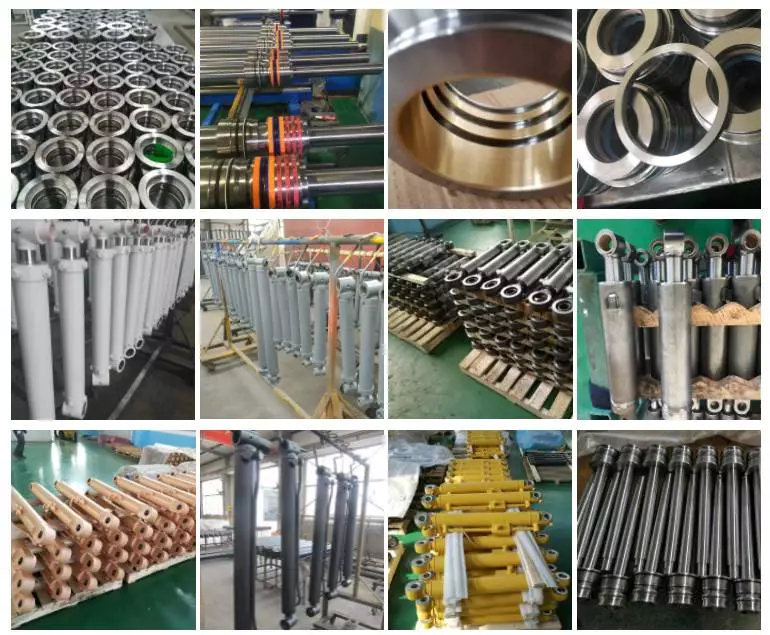
3.Professional performance excavator parts supplier
4. High quality and low price
FAQ
Q1: Are you Manufacture or Trade Company?
A1: We are manufacture,we have 20 years experience for supply Metal material and products in domestic.
Q2: How can we guarantee quality?
A2: Always a pre-production sample before mass production;Always final Inspection before shipment;
Q3: What is your terms of payment ?
A3: 1.T/T: 30% deposit in advance, the balance 70% paid before shipment
2.30% down payment, the balance 70% paid against L/C at sight
3.CHINAMFG negotiation
Q4: Can you provide Certificates for aluminum materials ?
A4:Yes,we can supply MTC-Material Test Certificate.
Q5: Can you provide sample?
A5: Yes, we can provide you sample, but you need to pay for the sample and freight firstly. We will return the sample fee after
you make an order.
| Certification: | GS, RoHS, CE, ISO9001 |
|---|---|
| Pressure: | Medium Pressure |
| Work Temperature: | Normal Temperature |
| Acting Way: | Double Acting |
| Working Method: | Piston Cylinder |
| Adjusted Form: | Switching Type |
| Customization: |
Available
|
|
|---|
Can hydraulic rams be customized for specific machinery and equipment?
Yes, hydraulic rams can be customized to meet the specific requirements of different machinery and equipment. Here’s a detailed explanation:
1. Size and Capacity: Hydraulic rams can be customized in terms of size and capacity to match the specific needs of machinery and equipment. The dimensions and specifications of the ram can be adjusted to ensure compatibility with the available space and the desired force output. This allows for efficient integration and optimal performance within the given machinery or equipment.
2. Pressure and Flow Requirements: Hydraulic rams can be tailored to operate within specific pressure and flow ranges. The hydraulic system can be designed to accommodate the required pressure and flow rates based on the machinery or equipment’s demands. This customization ensures that the hydraulic ram delivers the necessary force and fluid dynamics for efficient operation.
3. Mounting and Connection Options: Hydraulic rams can be customized with various mounting and connection options to facilitate easy installation and integration with specific machinery or equipment. Mounting brackets, flanges, or other attachment mechanisms can be designed to align with the mounting points or interfaces of the target equipment. This simplifies the installation process and ensures a secure and reliable connection.
4. Material Selection: The choice of materials for constructing a hydraulic ram can be customized to suit the requirements of the machinery or equipment. Different materials offer varying levels of strength, corrosion resistance, and durability. By selecting the appropriate materials, the hydraulic ram can withstand the operating conditions and environmental factors specific to the machinery or equipment.
5. Control Systems Integration: Hydraulic rams can be customized to seamlessly integrate with the control systems of the machinery or equipment. This allows for precise control and coordination of the hydraulic ram’s operation, enhancing the overall performance and functionality of the system. Integration options may include sensors, actuators, or electronic interfaces for efficient communication and control.
6. Specialized Features: Depending on the application, hydraulic rams can be customized with specialized features or functionalities. For example, in certain industries, additional safety features such as pressure relief valves or sensors may be required. Customizations can also include specific sealing mechanisms, temperature-resistant components, or adaptations for unique operating conditions.
By offering customization options in terms of size, capacity, pressure and flow requirements, mounting and connection options, material selection, control systems integration, and specialized features, hydraulic rams can be tailored to meet the specific needs of machinery and equipment. This flexibility ensures optimal performance, efficient operation, and seamless integration within the target systems.
Can hydraulic rams be employed in material handling equipment for pushing or lifting?
Yes, hydraulic rams are commonly employed in material handling equipment for pushing or lifting operations. Here’s a detailed explanation:
1. Pushing Operations: Material handling equipment, such as forklifts, pallet jacks, or skid steer loaders, often require the ability to push heavy loads. Hydraulic rams are utilized in these machines to provide the necessary pushing force. The hydraulic ram is connected to the machine’s hydraulic system and applies force to a pushing mechanism, such as forks or blades, allowing the equipment to move and push materials efficiently. The force generated by the hydraulic ram enables smooth and controlled pushing operations, enhancing productivity in material handling tasks.
2. Lifting Operations: Hydraulic rams are extensively employed in material handling equipment for lifting heavy loads. Equipment such as cranes, scissor lifts, or hydraulic elevators utilize hydraulic rams as lifting mechanisms. The hydraulic ram, typically in the form of a hydraulic cylinder, is connected to the equipment’s hydraulic system and exerts force to raise or lower the load. By extending or retracting the hydraulic ram, the equipment can lift or lower materials with precision. The hydraulic system provides the necessary power and control for safe and efficient lifting operations.
3. Load Capacity and Control: Hydraulic rams are designed to handle a wide range of load capacities in material handling equipment. The size and specifications of the hydraulic ram are determined based on the required lifting or pushing force. By selecting the appropriate hydraulic ram, material handling equipment can effectively handle various loads, from light to extremely heavy. Additionally, hydraulic systems offer precise control over the movement of the hydraulic ram, allowing operators to lift or push materials with accuracy and control, minimizing the risk of damage or accidents.
4. Safety Features: Material handling equipment employing hydraulic rams often incorporate safety features to ensure safe operation. These features may include overload protection, safety valves, or locking mechanisms to prevent accidental movement or collapse of the hydraulic ram. Safety measures contribute to the safe and reliable use of hydraulic rams in material handling equipment, protecting both operators and the materials being handled.
5. Versatility and Adaptability: Hydraulic rams offer versatility and adaptability in material handling equipment. They can be integrated into various types of equipment, including mobile or stationary machines, and are suitable for different environments and industries. Hydraulic rams can be customized to meet specific requirements, such as stroke length, speed, or load capacity, ensuring optimal performance in material handling applications.
In summary, hydraulic rams are commonly employed in material handling equipment for pushing or lifting operations. They provide the necessary force, load capacity, and control to efficiently handle materials. With their safety features, versatility, and adaptability, hydraulic rams play a crucial role in enhancing productivity and safety in material handling processes.
What industries commonly use hydraulic rams in their operations?
Hydraulic rams find applications in various industries where the pumping of water or hydraulic power is required. Here’s a detailed explanation of the industries that commonly use hydraulic rams:
1. Agriculture: The agricultural sector extensively uses hydraulic rams for irrigation purposes. Hydraulic rams are employed in farms to pump water from natural sources, such as rivers or streams, to higher elevations for irrigation of crops. They provide a cost-effective and sustainable solution for water distribution in agricultural fields.
2. Water and Wastewater Management: Hydraulic rams are utilized in water and wastewater management industries. They are employed in water treatment plants to pump water through different treatment stages, facilitating the movement of water and treatment processes. Hydraulic rams are also used in wastewater management systems to pump wastewater to higher elevations for further treatment or disposal.
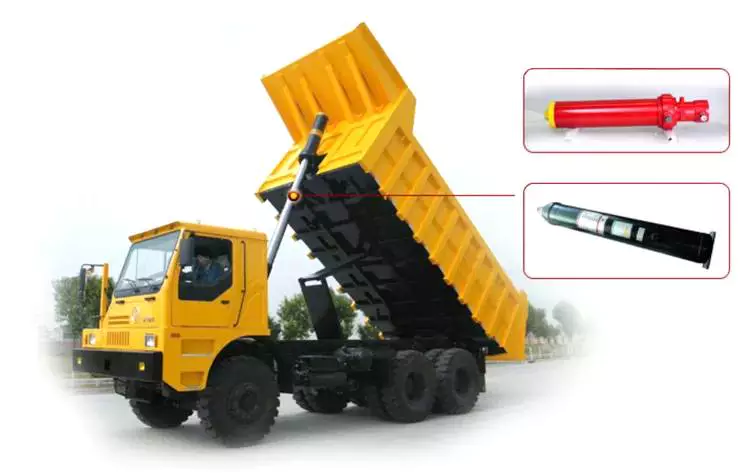
3. Construction: The construction industry utilizes hydraulic rams for various applications. They are commonly used in dewatering operations, where hydraulic rams help remove water from construction sites or excavations. Hydraulic rams also find applications in pile driving, where they provide the necessary force to drive piles into the ground.
4. Mining: Hydraulic rams are employed in the mining industry for dewatering purposes. They are used to remove water from mines or excavations, ensuring a safe and dry working environment. Hydraulic rams play a crucial role in preventing flooding and maintaining productivity in mining operations.
5. Environmental and Aquaculture: Hydraulic rams have applications in environmental and aquaculture industries. They are utilized in fish passage systems to help fish migrate upstream by creating water flows and elevations. Hydraulic rams are also employed in water circulation systems in aquaculture facilities, ensuring proper oxygenation and water quality for aquatic organisms.
6. Renewable Energy: Hydraulic rams play a role in the renewable energy sector, particularly in micro-hydropower systems. They are used to convert the energy of flowing water into mechanical power to drive turbines or generators, producing electricity in off-grid locations or areas with access to a reliable water source.
7. Rural and Remote Areas: Hydraulic rams are commonly used in rural and remote areas where access to electricity or conventional pumping systems is limited. They provide a sustainable and efficient solution for water supply, irrigation, and other pumping needs in such locations.
These industries demonstrate the versatility and broad application of hydraulic rams in various fields, where they serve as an effective and reliable method for pumping water and harnessing hydraulic power.


editor by CX 2023-12-13