
Product Description
Products Description
|
Product Name |
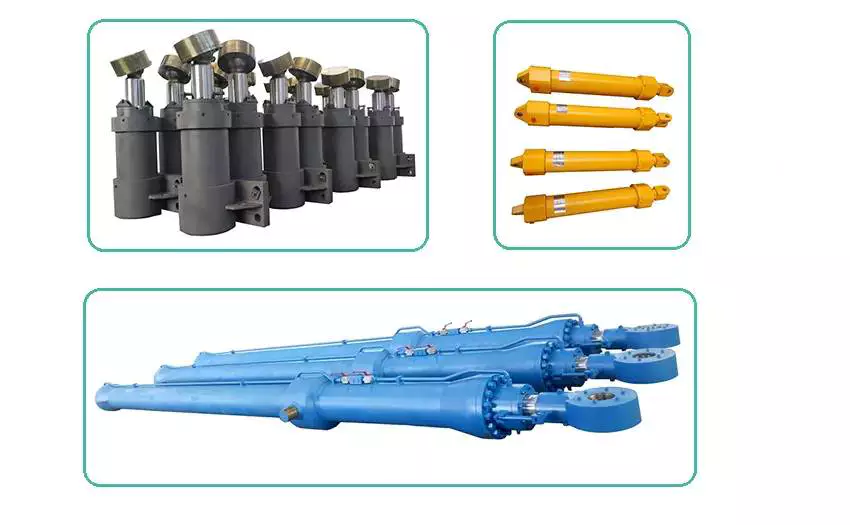
HSG Series Hydraulic Cylinder |
|||
|
Work Press |
7/14/16/21/31.5MPa 37.5/63MPa Can be Customized |
|||
|
Material |
Aluminum,Cast Iron,45mnb Steel,Stainless Steel |
|||
|
Bore Size |
40mm–320mm,Customizable |
|||
|
Shaft Diameter |
20mm–220mm,Customizable |
|||
|
Stroke Length |
30mm–14100mm,Customizable |
|||
|
Rod Surface Hardness |
HRC48-54 |
|||
|
Paint Color |
Black,Yellow,Blue,Brown,Customizable |
|||
|
Mounting |
Earring,Flange,Clevis.Foot,Trunnion,Customizable |
|||
|
Warrenty |
1 Year |
|||
|
MOQ |
1 Piece |
|||
|
Delivery Time |
7-15 Days,Also depands on specific demands |
|||
|
Certification |
ISO9001,CE |
|||
Company Profile
QIANGLIN HYDRAULIC MACHINERY CO., LTD
| QiangLin is a professional hydraulic equipment manufacturer, mainly engaged in hydraulic system design, manufacture, installation, transformation, sales, and technical services. Our manufacturing facilities are certified to the ISO 9001 standard. We are an approved supplier to many equipment manufacturers in China. We are also partners with many customers from America, Canada, Australia, Germany, England, and other European Countries. Product quality, shorter delivery time, and customer satisfaction are our long-term commitments to our CHINAMFG customers. Hope to be your partner. |
FAQ:
Q1: Are you a trading company or a manufacturer?
A: We have our own factory.
Q2: Are you able to make Non-standard or customized products?
A: Yes, we can.
Q3: How long is your delivery time?
A: Normally, the delivery time is 7 days if we have stock, 15-30 working days if we don’t. but it
also depends on the product
requirements and quantity.
Q4: Do you provide samples? are the samples free or not?
A: Yes, we can provide samples, but they are not free of charge.
Q5: What are your payment terms?
A: 30% deposit T/T or Irrevocable L/C at sight, If you have any questions, please feel free to
contact us.
Q6: What are your After-sales services?
A: Before shipment, Each individual product will be strictly inspected on our factory QC Process
System. In addition, We have a
Customer Service team to respond to customers’ questions within 12 hours. Being helpful in
solving customers’ problems is always our goal. /* March 10, 2571 17:59:20 */!function(){function s(e,r){var a,o={};try{e&&e.split(“,”).forEach(function(e,t){e&&(a=e.match(/(.*?):(.*)$/))&&1
| Certification: | CE, ISO9001 |
|---|---|
| Pressure: | High Pressure |
| Work Temperature: | Normal Temperature |
| Customization: |
Available
|
|
|---|
.shipping-cost-tm .tm-status-off{background: none;padding:0;color: #1470cc}
|
Shipping Cost:
Estimated freight per unit. |
about shipping cost and estimated delivery time. |
|---|
| Payment Method: |
|
|---|---|
|
Initial Payment Full Payment |
| Currency: | US$ |
|---|
| Return&refunds: | You can apply for a refund up to 30 days after receipt of the products. |
|---|
What safety considerations are important when working with hydraulic rams?
Working with hydraulic rams requires careful attention to safety to prevent accidents and ensure the well-being of personnel. Here’s a detailed explanation of important safety considerations:
1. Pressure Hazards: Hydraulic rams operate under high pressure, which can pose significant hazards if not properly managed. It is crucial to follow manufacturer guidelines and industry standards regarding maximum pressure limits. Pressure relief valves should be installed to prevent overpressurization, and pressure gauges should be used to monitor the system’s pressure levels.
2. Personal Protective Equipment (PPE): Workers involved in the operation or maintenance of hydraulic rams should wear appropriate personal protective equipment. This may include safety glasses, gloves, protective clothing, and steel-toe boots. PPE helps protect against potential hazards such as hydraulic fluid leaks, flying debris, or accidental contact with moving parts.
3. Lockout/Tagout Procedures: Before performing any maintenance or repair tasks on a hydraulic ram, proper lockout/tagout procedures must be followed. This involves isolating the hydraulic system from its power source, de-energizing the equipment, and securing it with lockout devices or tags to prevent unintentional startup. Lockout/tagout procedures ensure that the ram remains in a safe and non-operational state during maintenance activities.
4. Training and Competence: Only trained and competent personnel should operate or work on hydraulic rams. Proper training ensures that individuals understand the safe operating procedures, potential hazards, and emergency protocols associated with hydraulic systems. Competent workers are familiar with the equipment’s limitations, maintenance requirements, and troubleshooting techniques.
5. Inspection and Maintenance: Regular inspection and maintenance of hydraulic rams are essential for safety. Components should be inspected for signs of wear, leaks, or damage. Any identified issues should be promptly addressed to prevent potential failures or accidents. Maintenance tasks should be performed following manufacturer recommendations and industry best practices.
6. Fluid Handling: Hydraulic fluid used in rams can be hazardous. It is important to handle hydraulic fluid with care, avoiding skin contact or ingestion. Spills should be cleaned up promptly, and proper waste disposal procedures should be followed. Material Safety Data Sheets (MSDS) provided by the hydraulic fluid manufacturer should be consulted for specific handling and disposal guidelines.
7. Risk Assessment: Before working with hydraulic rams, a thorough risk assessment should be conducted to identify potential hazards and implement appropriate safety measures. This assessment should consider factors such as system pressure, equipment stability, environmental conditions, and human factors. Mitigation strategies should be implemented to minimize risks and ensure a safe working environment.
By adhering to these safety considerations, including managing pressure hazards, using appropriate PPE, following lockout/tagout procedures, providing training and competence, conducting regular inspection and maintenance, handling fluids safely, and performing risk assessments, the risks associated with working with hydraulic rams can be effectively mitigated, promoting a safe working environment for all personnel involved.
Can hydraulic rams be used in agricultural machinery for various tasks?
Yes, hydraulic rams are extensively used in agricultural machinery for various tasks. Here’s a detailed explanation:
1. Implements Control: Hydraulic rams play a crucial role in controlling and manipulating agricultural implements. Tractors, harvesters, and other agricultural machinery often use hydraulic rams to raise, lower, tilt, or adjust the position of implements such as plows, cultivators, seeders, and sprayers. The hydraulic rams provide the necessary force and control to optimize the performance and efficiency of these implements, allowing farmers to effectively prepare the soil, plant seeds, apply fertilizers, and perform other essential tasks.
2. Load Handling: Agricultural machinery often requires the ability to handle heavy loads. Hydraulic rams are employed in equipment like loaders, telehandlers, and forklifts used in agriculture to lift, lower, and manipulate loads such as bales, pallets, and containers. The hydraulic rams provide the lifting force required to handle these loads efficiently, enabling farmers to transport and stack agricultural materials with ease.
3. Steering and Braking: Hydraulic rams are utilized in the steering and braking systems of agricultural machinery. For example, hydraulic rams are employed in power steering systems to assist in turning the wheels of tractors or other agricultural vehicles. Hydraulic rams are also used in braking systems to transmit hydraulic pressure and force to actuate the brakes, ensuring safe and reliable stopping of agricultural machinery.
4. Suspension Systems: Agricultural machinery often operates in challenging terrains, and hydraulic rams are employed in suspension systems to provide a smooth and stable ride. Hydraulic rams absorb shocks and vibrations, improving operator comfort and reducing stress on the machinery. Suspension systems equipped with hydraulic rams ensure better traction, stability, and maneuverability, allowing agricultural machinery to operate effectively in uneven or rough terrain.
5. Bale Handling and Wrapping: Hydraulic rams are extensively used in bale handling and wrapping equipment. For instance, in baling machines, hydraulic rams compress and form bales of crops such as hay or straw. Hydraulic rams are also employed in bale wrappers to apply pressure and secure the wrapping material around the bales. These hydraulic ram-powered systems enhance the efficiency of bale handling and wrapping processes in agriculture.
6. PTO Control: Power Take-Off (PTO) systems are commonly found in agricultural machinery to transfer mechanical power from the engine to various attached implements. Hydraulic rams are utilized in PTO control systems to engage or disengage the PTO shaft, allowing farmers to selectively power specific implements as needed. The hydraulic rams provide the necessary force and control for smooth and precise PTO operation.
7. Custom Applications: Apart from the above-mentioned tasks, hydraulic rams can be customized and utilized in various other agricultural applications based on specific requirements. Their versatility and adaptability make them suitable for tasks such as gate opening/closing, livestock feeding systems, environmental control systems, and more.
In summary, hydraulic rams find extensive use in agricultural machinery for a wide range of tasks, including implements control, load handling, steering and braking, suspension systems, bale handling and wrapping, PTO control, and custom applications. Their ability to provide force, control, and versatility makes hydraulic rams an essential component in enhancing the efficiency and functionality of agricultural machinery.
Can you explain the purpose and applications of hydraulic rams?
The purpose of hydraulic rams is to pump water from a lower elevation to a higher elevation using the energy of flowing water. They have various applications in different fields. Here’s a detailed explanation:
1. Water Supply: Hydraulic rams are commonly used in water supply systems to pump water from a natural water source, such as a river or a stream, to a higher elevation. They can provide a reliable and efficient method of delivering water to areas that are located uphill or at a distance from the water source. This application is particularly useful in rural areas, agricultural settings, and remote locations where access to electricity or conventional pumping systems may be limited.
2. Irrigation: Hydraulic rams play a crucial role in agricultural irrigation. They can be used to pump water from a nearby water source, such as a river or a reservoir, to fields located at higher elevations. By utilizing the energy of flowing water, hydraulic rams eliminate the need for electricity or fuel-powered pumps, making irrigation systems more cost-effective and sustainable.
3. Drainage and Flood Control: Hydraulic rams can also be employed in drainage and flood control systems. They can be used to pump excess water from lower-lying areas to higher elevations or drainage channels. By utilizing the energy of flowing water, hydraulic rams can effectively remove water from flood-prone areas without the need for external power sources.
4. Water Recycling and Treatment: Hydraulic rams are utilized in water recycling and treatment systems. They can pump water from lower treatment stages to higher stages, facilitating the movement of water through different treatment processes. Hydraulic rams provide a sustainable and energy-efficient solution for water treatment facilities.
5. Hydropower Generation: In addition to pumping applications, hydraulic rams can also be used to generate hydropower. By harnessing the energy of flowing water, hydraulic rams can drive turbines or generators to produce electricity. This application is particularly useful in off-grid locations or areas with access to a reliable water source but limited electrical infrastructure.
6. Environmental Applications: Hydraulic rams are employed in various environmental applications, including fish passage systems, water circulation in aquaculture facilities, and water feature installations. Their ability to pump water without external power sources makes them suitable for environmentally sensitive areas.
Overall, hydraulic rams provide a sustainable and efficient solution for pumping water to higher elevations in a wide range of applications. They are particularly beneficial in areas with a natural flow of water and where access to electricity or conventional pumping systems is limited or impractical.


editor by CX 2023-12-19