
Product Description
Product Description
1.Supply to USA,Europe,and Australia, Russia.
2.Material:Stainless Steel
3.Professional performance excavator parts supplier
4. High quality and low price
Detailed Photos
Installation Instructions
Company Profile
HangZhou FAUN is a leading hydraulic cylinder manufacturer located in HangZhou, ZheJiang , China. HangZhou Xihu (West Lake) Dis. District is a famous hydraulic cylinder production base in China. It is 25 kilometers away from Yangtai Airport, 45 hours by car; 280 kilometers away from ZheJiang , 1 hour and 10 minutes by train.
We specialize in engineering hydraulic cylinders, piston hydraulic cylinders, plunger hydraulic cylinders, swing hydraulic cylinders, telescopic hydraulic cylinders, rack piston hydraulic cylinders, tie rod hydraulic cylinders, welding hydraulic cylinders, flange hydraulic cylinders, single/double acting hydraulic cylinders customized according to drawings.
Because of the regional industrial advantages, we also have the ability to provide the following product design and production capabilities: mini hydraulic power unit, hydraulic power system, hydraulic synchronous diverter valve, dust cover and other related hydraulic products.
Certifications
Packaging & Shipping
Inspection Process:
| Inspection Type | Inspection Standard |
| Raw Material Inspection | Before storage, QC takes the measurement of the raw materials. |
| Process Material Inspection | During the production, QCs conduct a random inspection. Before the hydraulic cylinder parts transferred to the next process, QCs takes inspection. |
| Final Function Testing | All the hydraulic cylinders take hydraulic function test |
Inspection of Mechanical Properties of Raw Materials
If possible, when contact with us, please apply information as below
|
Bore |
Rod |
Stroke |
Work Pressure |
Mounting |
Work environment |
|
|
|
|
|
|
|
Or you can offer us your sketch diagram or photos so that we could understand you exactly meaning, help us avoid mistakes.
And if you have samples, we can manufacture according to your samples after sending to us.
Welcome to our factory if you have any time.
Your satisfaction is our biggest motivation.
Now, you can contact with us for any question or inquiry.
FAQ:
1, What does your company do?
A: we are a supplier of high quality hydraulic products including Hydraulic Cylinder, Hydraulic Motor, Hydraulic Power Pack, Hydraulic station and other Hydraulic components.
2, Are you a manufacture or a trading company?
A: We are a manufacturer.
3, What certificate do you have?
A: All our factories are ISO certificated. And our main suppliers of materials and parts are with CE, RoHS, CSA and UL certificates.
4, How long is your delivery time?
A: The delivery time depends on different products and quantity. The cylinder usually need about 45-60 days and the Motor need about 30-50 days.
5, Can you make parts as customer’s requirement or drawing?
A: Yes, we can OEM for you as your drawings. Our engineer also can give you professional support for technical suggestions.
6, What kind of payment terms do you accept?
A: We prefer T/T through bank. 30% when order is confirmed and 70% before shipment. L/C is also acceptable for amount over 20,000USD.
7, What is your warranty policy?
A: All our products are warranted for 1 full year from date of delivery against defects in materials and workmanship. This warranty does not cover parts that are worn out through the course of normal operation or are damaged through negligence. We serious remind that unclean hydraulic oil will definitely cause damage to your Hydraulic components. And this damage is not included in the warranty range. So we strongly suggest you to use new clean oil or make sure the system oil are clean when using our parts
/* October 22, 2571 15:47:17 */(()=>{function d(e,r){var a,o={};try{e&&e.split(“,”).forEach(function(e,t){e&&(a=e.match(/(.*?):(.*)$/))&&1
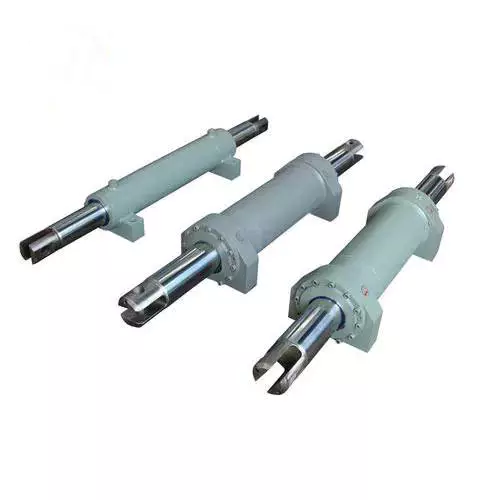
How does a hydraulic ram contribute to efficient and powerful force generation?
A hydraulic ram utilizes specific design principles and mechanisms to generate efficient and powerful forces. Here’s a detailed explanation:
1. Water Hammer Effect: The hydraulic ram harnesses the water hammer effect to generate powerful forces. When water flows into the ram during the drive phase, it gains velocity and momentum. As the water reaches a certain pressure threshold, the valve mechanism rapidly closes, creating a water hammer effect. This sudden closure of the valve generates a high-pressure pulse that propels a portion of the water to a higher elevation, producing a powerful force.
2. Momentum Transfer: The hydraulic ram efficiently transfers the momentum of flowing water to generate force. The momentum of the moving water is converted into mechanical work as the water hammer effect occurs. By utilizing the kinetic energy of the water, the hydraulic ram maximizes the efficiency of force generation.
3. Energy Recovery: One of the key features of a hydraulic ram is its ability to recover and reuse energy. As the water hammer effect occurs and the high-pressure pulse lifts a portion of the water, the remaining water in the ram’s drive pipe decelerates. This deceleration allows the kinetic energy of the water to be converted back into potential energy, which can be used to pump a new cycle of water. This energy recovery mechanism enhances the overall efficiency of the hydraulic ram.
4. Mechanical Advantage: A hydraulic ram incorporates mechanical advantage through its design. The valve mechanism and other components are optimized to multiply the force generated by the water hammer effect. By leveraging mechanical advantage, the hydraulic ram can produce a more powerful force output compared to the input force from the flowing water.
5. Self-Sustaining Operation: A hydraulic ram operates in a self-sustaining manner, requiring minimal external power sources. Once the ram is set up and primed with water, it can continue to operate using the energy of flowing water. This self-sustainability contributes to the efficiency of force generation, as it eliminates the need for continuous external energy input.
6. Simple and Robust Design: The design of a hydraulic ram is relatively simple and robust, enabling efficient force generation. The absence of complex components reduces friction and energy losses. Additionally, the robust design ensures durability and long-term reliability, making hydraulic rams suitable for various applications.
Through the water hammer effect, momentum transfer, energy recovery, mechanical advantage, self-sustaining operation, and a simple yet robust design, a hydraulic ram maximizes the efficiency and power of force generation. These features make hydraulic rams an effective and reliable choice for pumping water and harnessing hydraulic power.
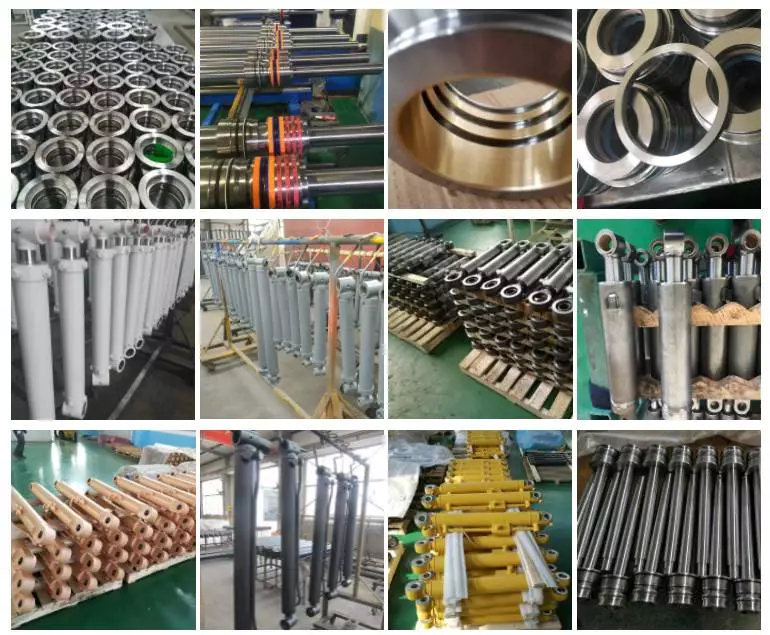
Can hydraulic rams be employed in material handling equipment for pushing or lifting?
Yes, hydraulic rams are commonly employed in material handling equipment for pushing or lifting operations. Here’s a detailed explanation:
1. Pushing Operations: Material handling equipment, such as forklifts, pallet jacks, or skid steer loaders, often require the ability to push heavy loads. Hydraulic rams are utilized in these machines to provide the necessary pushing force. The hydraulic ram is connected to the machine’s hydraulic system and applies force to a pushing mechanism, such as forks or blades, allowing the equipment to move and push materials efficiently. The force generated by the hydraulic ram enables smooth and controlled pushing operations, enhancing productivity in material handling tasks.
2. Lifting Operations: Hydraulic rams are extensively employed in material handling equipment for lifting heavy loads. Equipment such as cranes, scissor lifts, or hydraulic elevators utilize hydraulic rams as lifting mechanisms. The hydraulic ram, typically in the form of a hydraulic cylinder, is connected to the equipment’s hydraulic system and exerts force to raise or lower the load. By extending or retracting the hydraulic ram, the equipment can lift or lower materials with precision. The hydraulic system provides the necessary power and control for safe and efficient lifting operations.
3. Load Capacity and Control: Hydraulic rams are designed to handle a wide range of load capacities in material handling equipment. The size and specifications of the hydraulic ram are determined based on the required lifting or pushing force. By selecting the appropriate hydraulic ram, material handling equipment can effectively handle various loads, from light to extremely heavy. Additionally, hydraulic systems offer precise control over the movement of the hydraulic ram, allowing operators to lift or push materials with accuracy and control, minimizing the risk of damage or accidents.
4. Safety Features: Material handling equipment employing hydraulic rams often incorporate safety features to ensure safe operation. These features may include overload protection, safety valves, or locking mechanisms to prevent accidental movement or collapse of the hydraulic ram. Safety measures contribute to the safe and reliable use of hydraulic rams in material handling equipment, protecting both operators and the materials being handled.
5. Versatility and Adaptability: Hydraulic rams offer versatility and adaptability in material handling equipment. They can be integrated into various types of equipment, including mobile or stationary machines, and are suitable for different environments and industries. Hydraulic rams can be customized to meet specific requirements, such as stroke length, speed, or load capacity, ensuring optimal performance in material handling applications.
In summary, hydraulic rams are commonly employed in material handling equipment for pushing or lifting operations. They provide the necessary force, load capacity, and control to efficiently handle materials. With their safety features, versatility, and adaptability, hydraulic rams play a crucial role in enhancing productivity and safety in material handling processes.
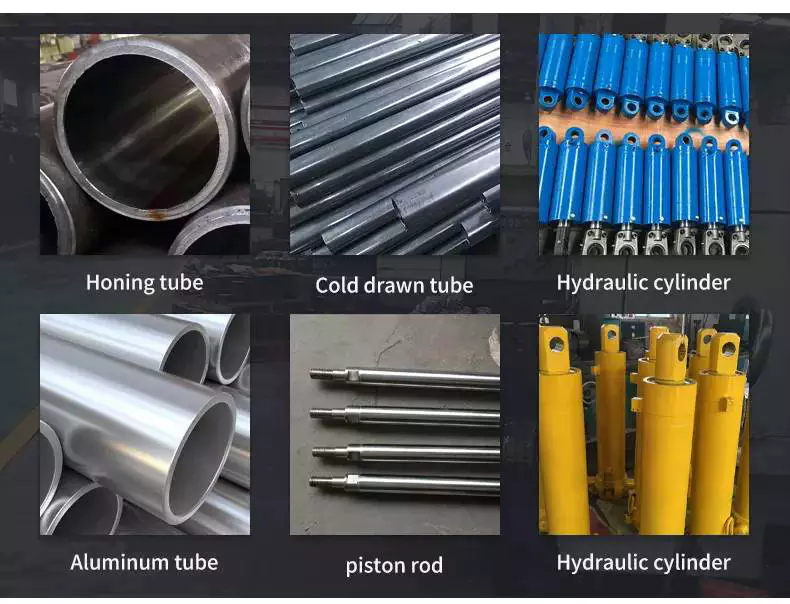
Can you explain the purpose and applications of hydraulic rams?
The purpose of hydraulic rams is to pump water from a lower elevation to a higher elevation using the energy of flowing water. They have various applications in different fields. Here’s a detailed explanation:
1. Water Supply: Hydraulic rams are commonly used in water supply systems to pump water from a natural water source, such as a river or a stream, to a higher elevation. They can provide a reliable and efficient method of delivering water to areas that are located uphill or at a distance from the water source. This application is particularly useful in rural areas, agricultural settings, and remote locations where access to electricity or conventional pumping systems may be limited.
2. Irrigation: Hydraulic rams play a crucial role in agricultural irrigation. They can be used to pump water from a nearby water source, such as a river or a reservoir, to fields located at higher elevations. By utilizing the energy of flowing water, hydraulic rams eliminate the need for electricity or fuel-powered pumps, making irrigation systems more cost-effective and sustainable.
3. Drainage and Flood Control: Hydraulic rams can also be employed in drainage and flood control systems. They can be used to pump excess water from lower-lying areas to higher elevations or drainage channels. By utilizing the energy of flowing water, hydraulic rams can effectively remove water from flood-prone areas without the need for external power sources.
4. Water Recycling and Treatment: Hydraulic rams are utilized in water recycling and treatment systems. They can pump water from lower treatment stages to higher stages, facilitating the movement of water through different treatment processes. Hydraulic rams provide a sustainable and energy-efficient solution for water treatment facilities.
5. Hydropower Generation: In addition to pumping applications, hydraulic rams can also be used to generate hydropower. By harnessing the energy of flowing water, hydraulic rams can drive turbines or generators to produce electricity. This application is particularly useful in off-grid locations or areas with access to a reliable water source but limited electrical infrastructure.
6. Environmental Applications: Hydraulic rams are employed in various environmental applications, including fish passage systems, water circulation in aquaculture facilities, and water feature installations. Their ability to pump water without external power sources makes them suitable for environmentally sensitive areas.
Overall, hydraulic rams provide a sustainable and efficient solution for pumping water to higher elevations in a wide range of applications. They are particularly beneficial in areas with a natural flow of water and where access to electricity or conventional pumping systems is limited or impractical.


editor by Dream 2024-12-02