
Product Description
Specifications:
| Product Name | HSG Series Hydraulic Cylinder |
| Work Press | 7/14/16/21/31.5MPa 37.5/63MPa Can be Customized |
| Material | Aluminum, Cast Iron,45mnb Steel, Stainless Steel |
| Bore Size | 40mm–320mm, Customizable |
| Shaft Diameter | 20mm–220mm, Customizable |
| Stroke Length | 30mm–14100mm, Customizable |
| Rod Surface Hardness | HRC48-54 |
| Operating Temperature | -40°C to +120 °C |
| Paint Color | Black, Yellow, Blue, Brown, Customizable |
| Service | OEM&ODM |
| Warranty | 1 Year |
| MOQ | 1 Piece |
| Delivery Time | 7-15 Days, Also depending on specific demands |
| Certification | ISO9001,CE |
| Capacity | 50,000Pcs per year |
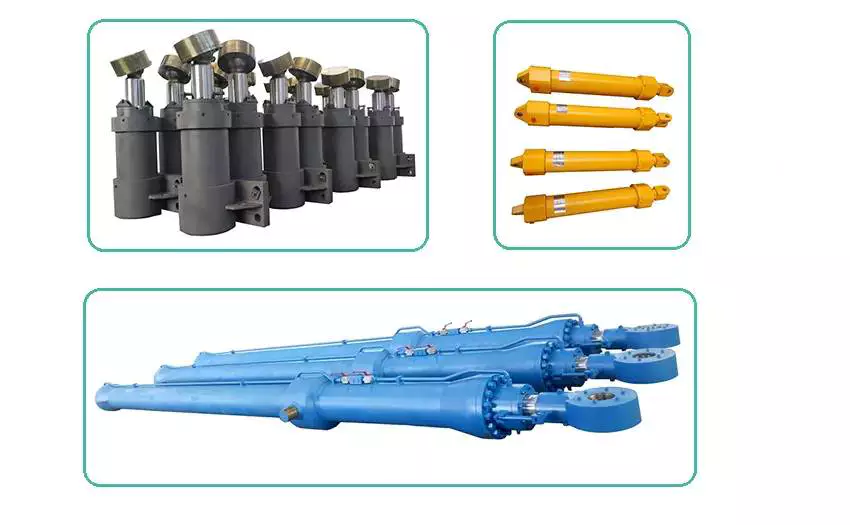
Product Display:
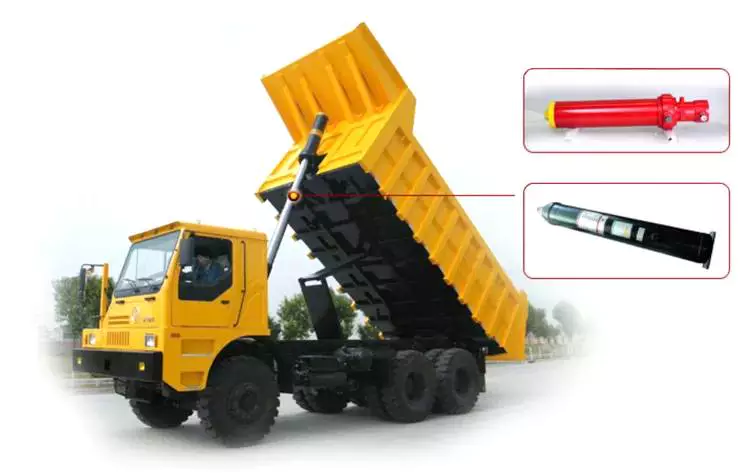
Mounting:
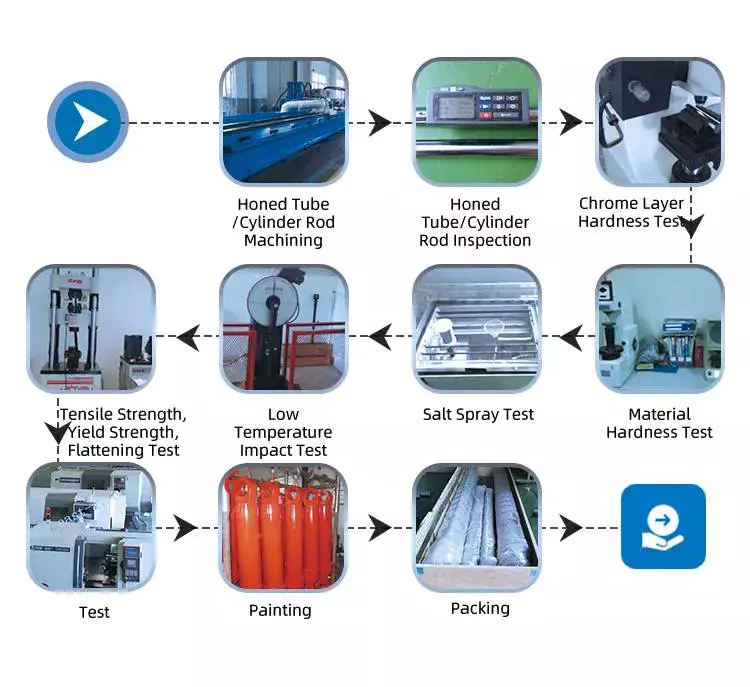
Working Flow: About Us
Tongte designs and manufactures durable, heavy-duty hydraulic products and accessories and offers lifecycle services to them. We constantly develop our machine base and operations to meet customer-specific needs and remain leaders in the industry. Beyond all else, we want to be the trusted, groundbreaking partner our customers truly need.
In addition to the customized cylinders, CHINAMFG offers hydraulic power units, Electric-Hydraulic linear actuators, piston accumulators, system configurations, and versatile services such as repair and manufacturing services. The modern production facilities are located in HangZhou, ZheJiang (China) where production started in 2001. The core values of Tongke guiding its business strongly are commitment, sustainability, interaction, and customer-first.
We possess over 20 years of experience in the industry and extensive global market experience, our customers are located all over the world, and we truly commit to the customers’ needs – these are the success factors of our family-owned company. Our vision is to grow and expand the business further into global markets.
FAQ:
Q1: What does your company do?
A: we are a supplier of high-quality hydraulic products including Hydraulic Cylinders, Hydraulic Power packs, Hydraulic Linear, and other Hydraulic components.
Q2:Are you a manufacturer or trading company?
A: We are a manufacturer.
Q3:Are you able to make Non-standard or customized products?
A: Yes, we can.
Q3: How long is your delivery time?
A: Normally, the delivery time is 7 days if we have stock, and 15-30 working days if we don’t. but it
also depends on the product
requirements and quantity.
Q4: Do you provide samples? are the samples free or not?
A: Yes, we can provide samples, but they are not free of charge.
Q5: What are your payment terms?
A: 30% deposit T/T or Irrevocable L/C at sight, If you have any questions, please feel free to
contact us.
Q6: What is your warranty policy?
A: All our products are warranted for 1 full year from the date of delivery against defects in materials and workmanship. Each individual product will be strictly inspected on our factory QC Process
System before shipment. We also have a Customer Service team to respond to customers’ questions within 12 hours.
| Certification: | ISO9001 |
|---|---|
| Pressure: | High Pressure |
| Work Temperature: | Normal Temperature |
| Customization: |
Available
|
|
|---|
.shipping-cost-tm .tm-status-off{background: none;padding:0;color: #1470cc}
|
Shipping Cost:
Estimated freight per unit. |
about shipping cost and estimated delivery time. |
|---|
| Payment Method: |
|
|---|---|
|
Initial Payment Full Payment |
| Currency: | US$ |
|---|
| Return&refunds: | You can apply for a refund up to 30 days after receipt of the products. |
|---|
What safety considerations are important when working with hydraulic rams?
Working with hydraulic rams requires careful attention to safety to prevent accidents and ensure the well-being of personnel. Here’s a detailed explanation of important safety considerations:
1. Pressure Hazards: Hydraulic rams operate under high pressure, which can pose significant hazards if not properly managed. It is crucial to follow manufacturer guidelines and industry standards regarding maximum pressure limits. Pressure relief valves should be installed to prevent overpressurization, and pressure gauges should be used to monitor the system’s pressure levels.
2. Personal Protective Equipment (PPE): Workers involved in the operation or maintenance of hydraulic rams should wear appropriate personal protective equipment. This may include safety glasses, gloves, protective clothing, and steel-toe boots. PPE helps protect against potential hazards such as hydraulic fluid leaks, flying debris, or accidental contact with moving parts.
3. Lockout/Tagout Procedures: Before performing any maintenance or repair tasks on a hydraulic ram, proper lockout/tagout procedures must be followed. This involves isolating the hydraulic system from its power source, de-energizing the equipment, and securing it with lockout devices or tags to prevent unintentional startup. Lockout/tagout procedures ensure that the ram remains in a safe and non-operational state during maintenance activities.
4. Training and Competence: Only trained and competent personnel should operate or work on hydraulic rams. Proper training ensures that individuals understand the safe operating procedures, potential hazards, and emergency protocols associated with hydraulic systems. Competent workers are familiar with the equipment’s limitations, maintenance requirements, and troubleshooting techniques.
5. Inspection and Maintenance: Regular inspection and maintenance of hydraulic rams are essential for safety. Components should be inspected for signs of wear, leaks, or damage. Any identified issues should be promptly addressed to prevent potential failures or accidents. Maintenance tasks should be performed following manufacturer recommendations and industry best practices.
6. Fluid Handling: Hydraulic fluid used in rams can be hazardous. It is important to handle hydraulic fluid with care, avoiding skin contact or ingestion. Spills should be cleaned up promptly, and proper waste disposal procedures should be followed. Material Safety Data Sheets (MSDS) provided by the hydraulic fluid manufacturer should be consulted for specific handling and disposal guidelines.
7. Risk Assessment: Before working with hydraulic rams, a thorough risk assessment should be conducted to identify potential hazards and implement appropriate safety measures. This assessment should consider factors such as system pressure, equipment stability, environmental conditions, and human factors. Mitigation strategies should be implemented to minimize risks and ensure a safe working environment.
By adhering to these safety considerations, including managing pressure hazards, using appropriate PPE, following lockout/tagout procedures, providing training and competence, conducting regular inspection and maintenance, handling fluids safely, and performing risk assessments, the risks associated with working with hydraulic rams can be effectively mitigated, promoting a safe working environment for all personnel involved.
Can hydraulic rams be used in agricultural machinery for various tasks?
Yes, hydraulic rams are extensively used in agricultural machinery for various tasks. Here’s a detailed explanation:
1. Implements Control: Hydraulic rams play a crucial role in controlling and manipulating agricultural implements. Tractors, harvesters, and other agricultural machinery often use hydraulic rams to raise, lower, tilt, or adjust the position of implements such as plows, cultivators, seeders, and sprayers. The hydraulic rams provide the necessary force and control to optimize the performance and efficiency of these implements, allowing farmers to effectively prepare the soil, plant seeds, apply fertilizers, and perform other essential tasks.
2. Load Handling: Agricultural machinery often requires the ability to handle heavy loads. Hydraulic rams are employed in equipment like loaders, telehandlers, and forklifts used in agriculture to lift, lower, and manipulate loads such as bales, pallets, and containers. The hydraulic rams provide the lifting force required to handle these loads efficiently, enabling farmers to transport and stack agricultural materials with ease.
3. Steering and Braking: Hydraulic rams are utilized in the steering and braking systems of agricultural machinery. For example, hydraulic rams are employed in power steering systems to assist in turning the wheels of tractors or other agricultural vehicles. Hydraulic rams are also used in braking systems to transmit hydraulic pressure and force to actuate the brakes, ensuring safe and reliable stopping of agricultural machinery.
4. Suspension Systems: Agricultural machinery often operates in challenging terrains, and hydraulic rams are employed in suspension systems to provide a smooth and stable ride. Hydraulic rams absorb shocks and vibrations, improving operator comfort and reducing stress on the machinery. Suspension systems equipped with hydraulic rams ensure better traction, stability, and maneuverability, allowing agricultural machinery to operate effectively in uneven or rough terrain.
5. Bale Handling and Wrapping: Hydraulic rams are extensively used in bale handling and wrapping equipment. For instance, in baling machines, hydraulic rams compress and form bales of crops such as hay or straw. Hydraulic rams are also employed in bale wrappers to apply pressure and secure the wrapping material around the bales. These hydraulic ram-powered systems enhance the efficiency of bale handling and wrapping processes in agriculture.
6. PTO Control: Power Take-Off (PTO) systems are commonly found in agricultural machinery to transfer mechanical power from the engine to various attached implements. Hydraulic rams are utilized in PTO control systems to engage or disengage the PTO shaft, allowing farmers to selectively power specific implements as needed. The hydraulic rams provide the necessary force and control for smooth and precise PTO operation.
7. Custom Applications: Apart from the above-mentioned tasks, hydraulic rams can be customized and utilized in various other agricultural applications based on specific requirements. Their versatility and adaptability make them suitable for tasks such as gate opening/closing, livestock feeding systems, environmental control systems, and more.
In summary, hydraulic rams find extensive use in agricultural machinery for a wide range of tasks, including implements control, load handling, steering and braking, suspension systems, bale handling and wrapping, PTO control, and custom applications. Their ability to provide force, control, and versatility makes hydraulic rams an essential component in enhancing the efficiency and functionality of agricultural machinery.
How is a hydraulic ram different from other hydraulic devices?
A hydraulic ram differs from other hydraulic devices in several key aspects. Here’s a detailed explanation:
1. Working Principle: The hydraulic ram operates based on the principle of water hammer effect and utilizes the kinetic energy of flowing water to pump a portion of that water to a higher elevation. In contrast, other hydraulic devices, such as hydraulic cylinders or hydraulic motors, typically rely on pressurized fluid, usually oil or hydraulic fluid, to generate mechanical force or rotational motion.
2. Energy Source: The hydraulic ram harnesses the energy of flowing water, which is often a renewable and readily available energy source. It does not require external power sources, such as electricity or fossil fuels, to operate. On the other hand, other hydraulic devices typically rely on external power, such as electric motors or engines, to drive the hydraulic fluid and generate hydraulic force or motion.
3. Application: The primary application of a hydraulic ram is to pump water from a lower elevation to a higher elevation, typically for irrigation, water supply, or other similar purposes. It is commonly used in areas with a natural flow of water. In contrast, other hydraulic devices have a wide range of applications across various industries, including construction, manufacturing, automotive, and aerospace. Hydraulic cylinders are commonly used for linear actuation and force generation, while hydraulic motors are used for rotating machinery and motion control.
4. Control and Adjustability: Hydraulic rams have limited control and adjustability compared to other hydraulic devices. The operation of a hydraulic ram is primarily dependent on the water flow and pressure fluctuations. While adjustments can be made to the valve opening or air vessel size, the control over the hydraulic ram’s performance is relatively limited. In contrast, other hydraulic devices offer greater control and adjustability through the use of control valves, flow regulators, pressure sensors, and other components. This allows for precise control of force, speed, and direction in hydraulic systems.
5. Complexity and Components: Hydraulic rams are relatively simple in design and have fewer components compared to other hydraulic devices. They typically consist of a drive pipe, delivery pipe, valve, and air vessel. Other hydraulic devices, such as hydraulic cylinders or hydraulic motors, often have more complex designs with additional components, such as pistons, seals, control valves, and hydraulic lines. The complexity of these devices allows for a wider range of functionalities and precise control but also requires more intricate maintenance and system design.
6. Efficiency: Hydraulic rams are known for their efficiency in converting the energy of flowing water into mechanical work. They can achieve high efficiency levels, especially when properly designed and installed. Other hydraulic devices can also be highly efficient, but their efficiency can be influenced by factors such as fluid leaks, friction losses, and mechanical inefficiencies in the system.
Overall, the hydraulic ram stands out as a specialized hydraulic device that utilizes the energy of flowing water for pumping applications. While it may have limitations in terms of control and adjustability compared to other hydraulic devices, its unique working principle and reliance on renewable energy make it a suitable choice in specific situations where a natural water source is available.


editor by CX 2023-12-12