
Product Description
Product Description
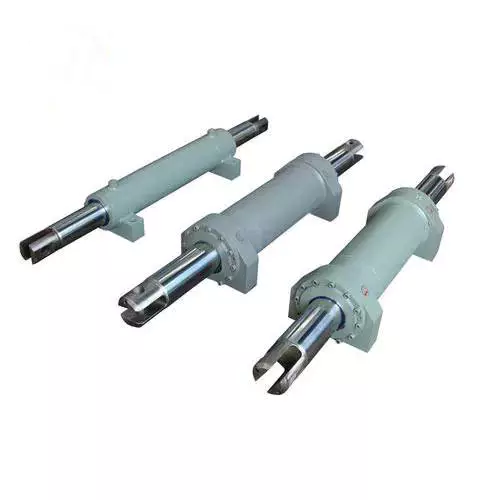
SD-Kewill design and production Industrial Cylinders that are designed to meet and exceed the most automation equipment requirements. Can meet OEM’s and End Users hydraulic and pneumatic cylinder solutions for maintenance&repairs, machinery changing and upgrade, projects development. SD-Kewill Industrial Cylinder’s wide use designed products with a veriety of sizes, series and different mountings.
SD-Kewill Cylinders for High Temperature Applications,Heavy Duty Hydraulic Cylinders, widely used in following industries: • Automation • Metal Forming • Steel • Press • Off Shore Oil • Mining • Entertainment • engineering machinery • Agricultural machinery
Product Parameters
| Way of action | Double acting / Single acting | ||||||
| Pressure level MPa |
7MPa |
14MPa | 16MPa | 21MPa | |||
| Cylinder D. range | Φ32~Φ250mm | ||||||
| Travel range: | 0~≤2m | ||||||
| Ambient temperature: | -20ºC~+80ºC, +80ºC~+350ºC | ||||||
| Work medium | Anti-wear hydraulic oil Water glycol fire resistant hydraulic oil |
||||||
| Cylinder head form | Tie rod connection | ||||||
| Installation form | earring connection | pin connection | Flange connection | Tripod connection | |||
| This series of tie rod hydraulic cylinders can also add connecting accessories to the piston rod, such as Y-type joints, I-type joints, joint bearings, etc. can used as a double-rod cylinder . Can be customized according to user details requirements. |
|||||||
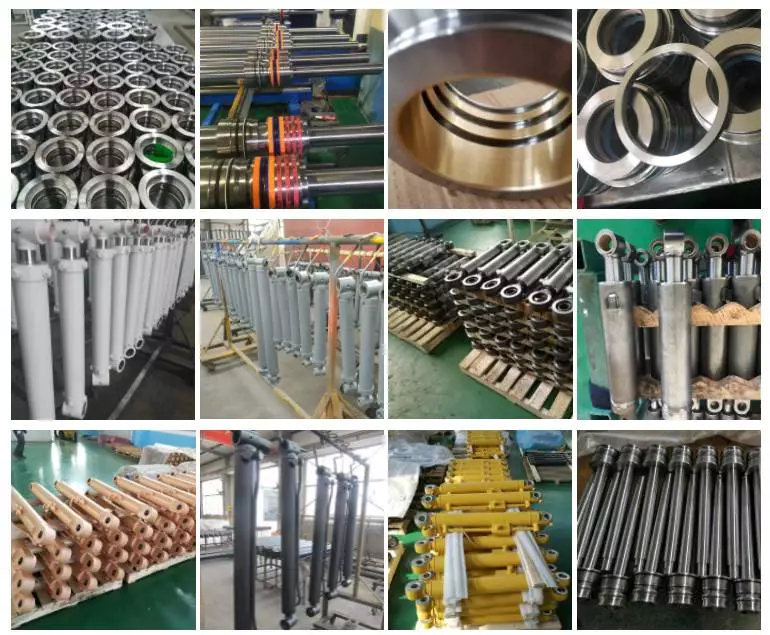
Detailed Photos
Packaging & Shipping
Company Profile
/* May 10, 2571 16:49:51 */!function(){function d(e,r){var a,o={};try{e&&e.split(“,”).forEach(function(e,t){e&&(a=e.match(/(.*?):(.*)$/))&&1
How does a hydraulic ram contribute to efficient and powerful force generation?
A hydraulic ram utilizes specific design principles and mechanisms to generate efficient and powerful forces. Here’s a detailed explanation:
1. Water Hammer Effect: The hydraulic ram harnesses the water hammer effect to generate powerful forces. When water flows into the ram during the drive phase, it gains velocity and momentum. As the water reaches a certain pressure threshold, the valve mechanism rapidly closes, creating a water hammer effect. This sudden closure of the valve generates a high-pressure pulse that propels a portion of the water to a higher elevation, producing a powerful force.
2. Momentum Transfer: The hydraulic ram efficiently transfers the momentum of flowing water to generate force. The momentum of the moving water is converted into mechanical work as the water hammer effect occurs. By utilizing the kinetic energy of the water, the hydraulic ram maximizes the efficiency of force generation.
3. Energy Recovery: One of the key features of a hydraulic ram is its ability to recover and reuse energy. As the water hammer effect occurs and the high-pressure pulse lifts a portion of the water, the remaining water in the ram’s drive pipe decelerates. This deceleration allows the kinetic energy of the water to be converted back into potential energy, which can be used to pump a new cycle of water. This energy recovery mechanism enhances the overall efficiency of the hydraulic ram.
4. Mechanical Advantage: A hydraulic ram incorporates mechanical advantage through its design. The valve mechanism and other components are optimized to multiply the force generated by the water hammer effect. By leveraging mechanical advantage, the hydraulic ram can produce a more powerful force output compared to the input force from the flowing water.
5. Self-Sustaining Operation: A hydraulic ram operates in a self-sustaining manner, requiring minimal external power sources. Once the ram is set up and primed with water, it can continue to operate using the energy of flowing water. This self-sustainability contributes to the efficiency of force generation, as it eliminates the need for continuous external energy input.
6. Simple and Robust Design: The design of a hydraulic ram is relatively simple and robust, enabling efficient force generation. The absence of complex components reduces friction and energy losses. Additionally, the robust design ensures durability and long-term reliability, making hydraulic rams suitable for various applications.
Through the water hammer effect, momentum transfer, energy recovery, mechanical advantage, self-sustaining operation, and a simple yet robust design, a hydraulic ram maximizes the efficiency and power of force generation. These features make hydraulic rams an effective and reliable choice for pumping water and harnessing hydraulic power.
Can hydraulic rams be employed in material handling equipment for pushing or lifting?
Yes, hydraulic rams are commonly employed in material handling equipment for pushing or lifting operations. Here’s a detailed explanation:
1. Pushing Operations: Material handling equipment, such as forklifts, pallet jacks, or skid steer loaders, often require the ability to push heavy loads. Hydraulic rams are utilized in these machines to provide the necessary pushing force. The hydraulic ram is connected to the machine’s hydraulic system and applies force to a pushing mechanism, such as forks or blades, allowing the equipment to move and push materials efficiently. The force generated by the hydraulic ram enables smooth and controlled pushing operations, enhancing productivity in material handling tasks.
2. Lifting Operations: Hydraulic rams are extensively employed in material handling equipment for lifting heavy loads. Equipment such as cranes, scissor lifts, or hydraulic elevators utilize hydraulic rams as lifting mechanisms. The hydraulic ram, typically in the form of a hydraulic cylinder, is connected to the equipment’s hydraulic system and exerts force to raise or lower the load. By extending or retracting the hydraulic ram, the equipment can lift or lower materials with precision. The hydraulic system provides the necessary power and control for safe and efficient lifting operations.
3. Load Capacity and Control: Hydraulic rams are designed to handle a wide range of load capacities in material handling equipment. The size and specifications of the hydraulic ram are determined based on the required lifting or pushing force. By selecting the appropriate hydraulic ram, material handling equipment can effectively handle various loads, from light to extremely heavy. Additionally, hydraulic systems offer precise control over the movement of the hydraulic ram, allowing operators to lift or push materials with accuracy and control, minimizing the risk of damage or accidents.
4. Safety Features: Material handling equipment employing hydraulic rams often incorporate safety features to ensure safe operation. These features may include overload protection, safety valves, or locking mechanisms to prevent accidental movement or collapse of the hydraulic ram. Safety measures contribute to the safe and reliable use of hydraulic rams in material handling equipment, protecting both operators and the materials being handled.
5. Versatility and Adaptability: Hydraulic rams offer versatility and adaptability in material handling equipment. They can be integrated into various types of equipment, including mobile or stationary machines, and are suitable for different environments and industries. Hydraulic rams can be customized to meet specific requirements, such as stroke length, speed, or load capacity, ensuring optimal performance in material handling applications.
In summary, hydraulic rams are commonly employed in material handling equipment for pushing or lifting operations. They provide the necessary force, load capacity, and control to efficiently handle materials. With their safety features, versatility, and adaptability, hydraulic rams play a crucial role in enhancing productivity and safety in material handling processes.
What are the components and parts of a hydraulic ram?
A hydraulic ram consists of several key components and parts. Here’s a detailed explanation:
1. Drive Pipe: The drive pipe is the inlet pipe through which the flowing water enters the hydraulic ram. It is connected to a water source, such as a stream or a river, and carries the water that provides the energy for the hydraulic ram.
2. Delivery Pipe: The delivery pipe is the outlet pipe through which the water is pumped to the desired destination at a higher elevation. It carries the lifted water away from the hydraulic ram.
3. Valve: The valve controls the flow of water within the hydraulic ram. It is responsible for allowing the water to enter the ram during the drive phase and closing to create the water hammer effect during the delivery phase. The valve’s opening and closing are crucial for the hydraulic ram’s operation.
4. Air Vessel: The air vessel, also known as the air chamber or air dome, is a chamber that contains compressed air. It acts as an accumulator and helps maintain a constant flow of water by absorbing pressure fluctuations during the operation of the hydraulic ram. The compressed air in the air vessel provides a cushioning effect and contributes to the overall efficiency of the ram.
5. Waste Valve: Some hydraulic ram designs include a waste valve. The waste valve is an optional component that allows excess water or air to escape from the hydraulic ram if the pressure becomes too high. It helps protect the ram from damage caused by excessive pressure build-up.
6. Seals and Gaskets: Seals and gaskets are essential components that prevent leakage of water or air from the hydraulic ram. They ensure the proper functioning and efficiency of the ram by maintaining the necessary pressure differentials and preventing loss of energy.
7. Frame and Mounting: The hydraulic ram is typically housed within a sturdy frame or housing that provides support and protection for the components. The frame also serves as a mounting point for installation, securing the ram in the desired location.
8. Control Mechanism (Optional): Some hydraulic ram systems may incorporate a control mechanism, such as a lever or float, to regulate the operation of the ram. This mechanism allows manual or automatic control over the valve opening and closing, providing additional flexibility and adjustability.
These components work together to enable the hydraulic ram to harness the energy of flowing water and pump a portion of that water to a higher elevation without the need for external power sources.
<img src="https://img.jiansujichilun.com/img/hydrauliccylinders/hydrauliccylinders-l1.webp" alt="China Standard High Tensile Hard Chrome Plated Tie Rod Hydraulic RAM for Argricultural Equipment vacuum pump engine “><img src="https://img.jiansujichilun.com/img/hydrauliccylinders/hydrauliccylinders-l2.webp" alt="China Standard High Tensile Hard Chrome Plated Tie Rod Hydraulic RAM for Argricultural Equipment vacuum pump engine “>
editor by Dream 2024-10-09