
Product Description
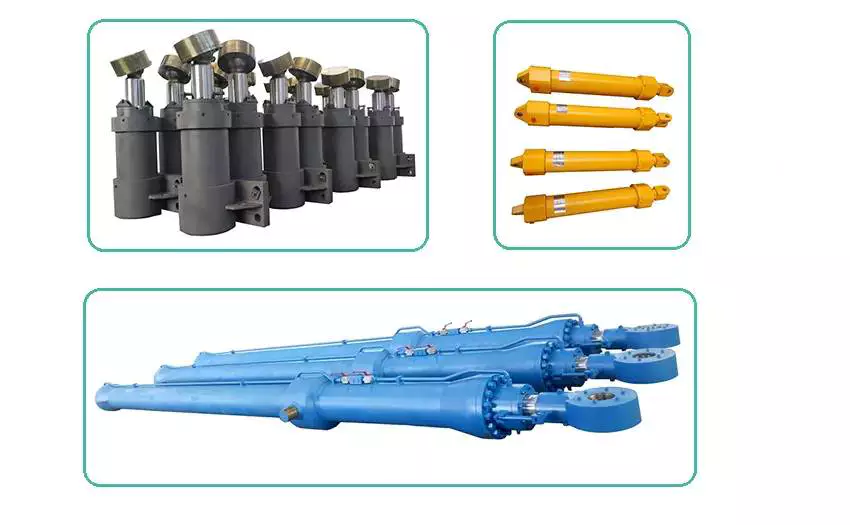
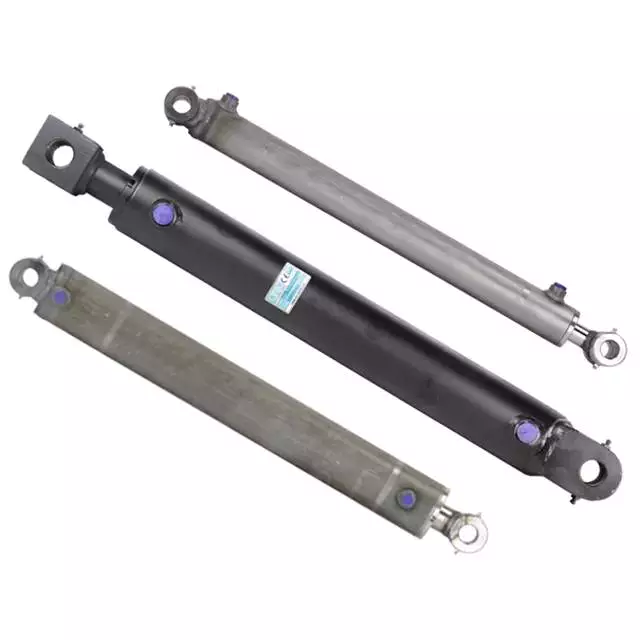
Hydraulic Cylinders & Rams for Sale
Parker single acting telescopic cylinders provide value through proven reliability, efficient performance, increased safety. Each CHINAMFG single acting telescopic hydraulic cylinder features threaded steel stop rings for ease of service and reliable stopping, welded overlaps for increased service life, and longer sleeve overlap for improved stability.
External packing nuts provide added support to the tube exterior, and the polyurethane rod wipers resist higher temperatures without extrusion. The bleeder-less design eliminates the costly and time-consuming process of removing air from the cylinder. Every CHINAMFG type single acting telescopic cylinder is individually tested before leaving our plant to assure proper performance and leak-free operation.
Features
·Parker Seal Division-“Zero-leak” Sealing Package
·100,000 Yield Induction Hardened Chrome Plated Rod as Standard
·Skived and Burnished Tubing
·Hardened Pin-eye Bushings
·Parker”Zero-leak” Internal Bypass Piston Design
·Greater Rod Support
Benefits
·Leak Free Extended Life
·More Resilient to External Damage
·Consistant Quality
·Extends Cylinder Life as Cylinder Wears
·More Efficient/Less Heat
·Resiste rod Deflection and Side Loading
Product Description
| Application | Dump truck, Tipping, Trailer, Underbody, Roll-off Hoist |
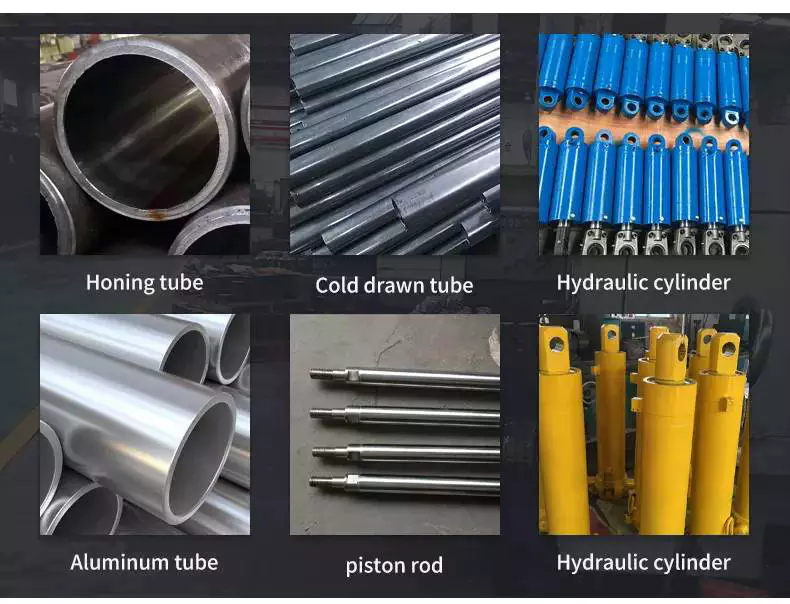
| Material of cylinder tube | 45 steel,27SiMn, Carbon steel, Alloy steel, and general seamless steel |
| Seal | Hallite,NOK,Guarnitec,Parker,and other equivalent brands |
| Coating | Hard Chrome 0.03-0.05mm |
| Temperature | _30°C to +100°C |
| Working Pressure | 16Mpa-20Mpa |
| Stroke | 2755mm-8530mm |
| Color | as Customer’s Requirement |
| Mounting type | Earring-trunnion,double trunnion,double earring(eye end) |
| Plunger | 20#,45# steel with a high frequency quenching |
| Certification | ISO/TS 16949,ISO9001,ABS,API,SGS |
| Package | Shrink film, pallet, plywood case |
| Warranty | 12 months |
| Delivery time | 25-30 days after down payment |
Company Profile
JUNRUI specialize in the production and R&D of Dump Truck&Trailer Telescopic Hydraulic Cylinder, Dump Truck Hydraulic System,Agricultural Machinery Hydraulic Cylinder, Garbage Truck Hydraulic Cylinder, Tipping Platform Hydraulic Cylinder,Snow Plow Hydraulic Cylinder and so on.
Over the years development,our products have been exported to America, Australia, Russia, Canada, Mexico,Colombia,Netherlands etc
and have been widely praised by the customers from home and abroad.
We are committed to providing customers with high quality and reasonable price products.
All Junrui products are designed,engineered and manufactured by highly skilled and experienced engineers,
All the products do QC 3 times before delivery to make sure the quality.
The company has imported CNC deep hole boring machines, CNC laser cutting machines, CNC machining centers, CNC cleaning machines, automatic assembly lines for hydraulic cylinders, robot welding stations, automatic welding machines and other precision processing equipment, over 200 sets.
After years of development, JUNRUI Hydraulic has developed into an enterprise with complete hardware facilities, sophisticated processing equipment, strong technical force, and good social benefits. For the stable development of your main business, we look CHINAMFG to cooperating with you.
Certifications
HIGH QUALITITY GUARANTEE- Telescopic hydraulic cylinder for dump truck
-7*24 service.
-Competitive price.
-Professional technical team.
-Perfect after-sales service system.
-ODM&OEM according to customer needs.
-Strong production capacity to ensure fast delivery.
-Guarantee Quality. Every process must be inspected, all products need be tested before leaving the factory.
<Hydraulic Cylinder Leak Test
<Telescopic Hydraulic jack Buffer Test
<Hydraulic Telescopic Cylinder Reliability Test
<Dump truck Hydraulic Cylinder Full Stroke Test
<Dump trailer Hydraulic Cylinder Trial Operation Test
<Tipper truck Cylinder Pressure Tight Test
<Dump truck telescopic Hydraulic Cylinder Load Efficiency Test
<Dump trailer telescopic Hydraulic Cylinder Start-up Pressure Test
<Long stroke single acting hydraulic telescopic cylinder Testing the Effect of Limit
JUNRUI Package
FAQ
Q1.Do you have MOQ?
Depending on different ideas, Can be negotiated. The larger the quantity is, the competitive the unit price will be.
Q2.Should the customer pay the delivery fee, How much is it?
For the delivery fee, many samples are being requested to be sent, so we must get the delivery fee.
If you tell me to use the appointed Express, you will give me your express account or you will pay according to the Express.
If you do not request, I will choose a cheap one in China.
Q3.How about the after sale service?
1) We will always keep the quality the same as the buyer’s samples and if there is something with the quality, we will make compensation for our customers.
2) We will suggest our packing and take charge in our packing, we will keep the goods safe in the delivery.
3) We will trace the goods from the production to selling, we will solve the problems in the selling for our customers.
Q4.When can I get a price?
We usually quote within 24 hours after we get your inquiry.
Q5: Are you a trade company or manufacturer?
We are a professional manufacturer with our factory.
/* May 10, 2571 16:49:51 */!function(){function d(e,r){var a,o={};try{e&&e.split(“,”).forEach(function(e,t){e&&(a=e.match(/(.*?):(.*)$/))&&1
What safety considerations are important when working with hydraulic rams?
Working with hydraulic rams requires careful attention to safety to prevent accidents and ensure the well-being of personnel. Here’s a detailed explanation of important safety considerations:
1. Pressure Hazards: Hydraulic rams operate under high pressure, which can pose significant hazards if not properly managed. It is crucial to follow manufacturer guidelines and industry standards regarding maximum pressure limits. Pressure relief valves should be installed to prevent overpressurization, and pressure gauges should be used to monitor the system’s pressure levels.
2. Personal Protective Equipment (PPE): Workers involved in the operation or maintenance of hydraulic rams should wear appropriate personal protective equipment. This may include safety glasses, gloves, protective clothing, and steel-toe boots. PPE helps protect against potential hazards such as hydraulic fluid leaks, flying debris, or accidental contact with moving parts.
3. Lockout/Tagout Procedures: Before performing any maintenance or repair tasks on a hydraulic ram, proper lockout/tagout procedures must be followed. This involves isolating the hydraulic system from its power source, de-energizing the equipment, and securing it with lockout devices or tags to prevent unintentional startup. Lockout/tagout procedures ensure that the ram remains in a safe and non-operational state during maintenance activities.
4. Training and Competence: Only trained and competent personnel should operate or work on hydraulic rams. Proper training ensures that individuals understand the safe operating procedures, potential hazards, and emergency protocols associated with hydraulic systems. Competent workers are familiar with the equipment’s limitations, maintenance requirements, and troubleshooting techniques.
5. Inspection and Maintenance: Regular inspection and maintenance of hydraulic rams are essential for safety. Components should be inspected for signs of wear, leaks, or damage. Any identified issues should be promptly addressed to prevent potential failures or accidents. Maintenance tasks should be performed following manufacturer recommendations and industry best practices.
6. Fluid Handling: Hydraulic fluid used in rams can be hazardous. It is important to handle hydraulic fluid with care, avoiding skin contact or ingestion. Spills should be cleaned up promptly, and proper waste disposal procedures should be followed. Material Safety Data Sheets (MSDS) provided by the hydraulic fluid manufacturer should be consulted for specific handling and disposal guidelines.
7. Risk Assessment: Before working with hydraulic rams, a thorough risk assessment should be conducted to identify potential hazards and implement appropriate safety measures. This assessment should consider factors such as system pressure, equipment stability, environmental conditions, and human factors. Mitigation strategies should be implemented to minimize risks and ensure a safe working environment.
By adhering to these safety considerations, including managing pressure hazards, using appropriate PPE, following lockout/tagout procedures, providing training and competence, conducting regular inspection and maintenance, handling fluids safely, and performing risk assessments, the risks associated with working with hydraulic rams can be effectively mitigated, promoting a safe working environment for all personnel involved.
How does a hydraulic ram handle variations in hydraulic hose technology?
A hydraulic ram is designed to handle variations in hydraulic hose technology. Here’s a detailed explanation:
1. Compatibility: Hydraulic rams are designed to be compatible with various types of hydraulic hoses available in the market. Hydraulic hoses come in different sizes, materials, and specifications, and hydraulic ram manufacturers ensure that their products can accommodate these variations. The hydraulic ram’s connectors, fittings, and seals are designed to match standard hydraulic hose sizes and connections, allowing for easy integration and compatibility.
2. Pressure Ratings: Hydraulic hoses have specific pressure ratings that indicate the maximum pressure they can withstand. Hydraulic rams are engineered to operate within the pressure limits specified by the hydraulic hoses. The hydraulic ram’s components, such as seals and cylinders, are designed and selected to handle the maximum pressure rating of the hydraulic hose to ensure safe and reliable operation. This consideration allows hydraulic rams to effectively handle variations in hydraulic hose technology.
3. Flexibility and Bend Radius: Hydraulic hoses can have different levels of flexibility and bend radius based on their construction and materials. Hydraulic rams are designed to accommodate the flexibility and bend radius requirements of the hydraulic hoses they are used with. The hydraulic ram’s design includes provisions for hose routing, allowing for proper hose installation without excessive bending or strain. By considering the flexibility and bend radius of hydraulic hoses, hydraulic rams ensure optimal performance and longevity of the hose assemblies.
4. Fluid Compatibility: Hydraulic hoses are designed to handle specific types of hydraulic fluids, such as mineral oil-based fluids or synthetic fluids. Hydraulic rams are constructed using materials compatible with a wide range of hydraulic fluids. The seals and other components in the hydraulic ram are selected to withstand the chemical properties of the hydraulic fluid used. This compatibility ensures that the hydraulic ram can handle variations in hydraulic hose technology without compromising performance or causing fluid leaks.
5. Industry Standards: Hydraulic hose technology is governed by industry standards and specifications. Hydraulic ram manufacturers adhere to these standards to ensure compatibility and safety. Common standards, such as SAE (Society of Automotive Engineers) or ISO (International Organization for Standardization), provide guidelines for hydraulic hose dimensions, pressure ratings, and performance requirements. Hydraulic rams are designed and manufactured in accordance with these standards to ensure reliable and consistent performance across different hydraulic hose technologies.
In summary, hydraulic rams are designed to handle variations in hydraulic hose technology through compatibility with different hose sizes and connections, consideration of pressure ratings, flexibility and bend radius requirements, fluid compatibility, and adherence to industry standards. These design considerations ensure that hydraulic rams can effectively and safely operate with various hydraulic hose technologies in different applications.
What is the importance of hydraulic fluid in a hydraulic ram?
Hydraulic fluid plays a critical role in the operation of a hydraulic ram. It serves several important functions that are essential for the ram’s performance and efficiency. Here’s a detailed explanation:
1. Transmitting Power: Hydraulic fluid is a medium that transfers power within the hydraulic ram. When water flows into the ram during the drive phase, it exerts pressure on the hydraulic fluid. This pressure is transmitted to other parts of the ram, such as the valve mechanism or the air vessel, enabling the conversion of hydraulic energy into mechanical work.
2. Lubrication: Hydraulic fluid acts as a lubricant for the moving parts of the hydraulic ram. It reduces friction between components, minimizing wear and tear and ensuring smooth operation. Proper lubrication helps extend the lifespan of the ram and improves its overall efficiency.
3. Heat Dissipation: During the operation of a hydraulic ram, heat is generated due to the conversion of hydraulic energy. Hydraulic fluid helps dissipate this heat, preventing overheating of the ram’s components. Effective heat dissipation maintains the ram’s performance and prevents damage caused by excessive temperatures.
4. Sealing and Contamination Control: Hydraulic fluid provides a sealing function within the ram. It fills the gaps and spaces between components, preventing leakage of water or air. Additionally, hydraulic fluid helps control contamination by forming a barrier that prevents external contaminants, such as dirt or debris, from entering the hydraulic system. This helps maintain the cleanliness and integrity of the ram.
5. Pressure Transmission: Hydraulic fluid is incompressible, allowing it to transmit pressure effectively within the ram. It enables the transfer of hydraulic energy from the water to the various components, ensuring the proper functioning of the ram.
6. Compatibility with Materials: Hydraulic fluid is selected based on its compatibility with the materials used in the hydraulic ram. It should not degrade or damage the ram’s components over time. Proper fluid selection ensures that the hydraulic ram operates reliably and remains in good condition.
Overall, hydraulic fluid is of utmost importance in a hydraulic ram. It transmits power, provides lubrication, dissipates heat, seals the system, controls contamination, transmits pressure, and ensures compatibility with the ram’s materials. These functions contribute to the smooth operation, efficiency, and longevity of the hydraulic ram.
<img src="https://img.jiansujichilun.com/img/hydrauliccylinders/hydrauliccylinders-l1.webp" alt="China Standard Hydraulic Cylinders & Rams for Sale with Hot selling “><img src="https://img.jiansujichilun.com/img/hydrauliccylinders/hydrauliccylinders-l2.webp" alt="China Standard Hydraulic Cylinders & Rams for Sale with Hot selling “>
editor by Dream 2024-10-08